Roadkill, feral culls and incursion response — disposed of on your terms
Regional councils and biosecurity programmes deal constantly with roadkill, pest control and incursion waste. An on-programme incinerator is a frictionless, budgeted utility purchase.

What's costing you right now
Constant, unpredictable disposal volume
Roadkill, pest-control culls and incursion events generate waste that has to be dealt with compliantly and fast.
Compliance and consent scrutiny
Disposal has to stand up to air-discharge consent conditions and public scrutiny.
What owning the machine changes
Budget-fit, sign-off-ready
A defined capital item that fits within allocated programme budget — often a fast internal approval.
Engineered to consent conditions
Dual-chamber design and emissions documentation to support air-discharge requirements.
Response-ready capacity
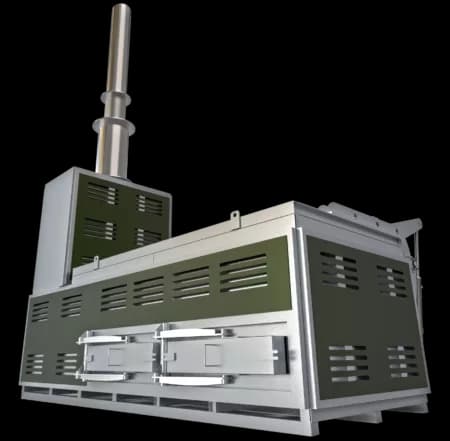
The i8-500A handles up to 450 kg/hr; larger continuous-feed line systems are available for incursion response and major culls.
Councils carry allocated budget and recurring disposal needs (roadkill, feral goats/pigs/wallabies, incursion response) — a high-fit, sign-off-ready purchase.
H5N1 has reached Australia. Is your disposal capability in place before you need it?
In June 2026, H5N1 bird flu was detected on Australian shores for the first time — so far only in vagrant migratory seabirds on the remote southern coast of WA, with no cases in commercial poultry. But the multi-billion-dollar poultry sector is on high alert, and the country has a fresh reminder of what a serious outbreak demands.
The 2024–25 H7 outbreak forced the culling of around 2.4 million birds across Victoria, NSW and the ACT. The hardest part of any response isn't the cull — it's destroying infected carcasses fast, on-site, without moving contaminated material off the property, and with the documentation an incursion response requires.
That capability is something you want standing by before an outbreak, not sourced in the middle of one. An on-site Inciner8 unit turns biosecure mortality disposal from a crisis scramble into a routine, auditable procedure — containing the risk where it starts.
Sources: Australian Dept. of Agriculture, Fisheries & Forestry (DAFF) and outbreak.gov.au, June 2026. Risk to people is currently rated low.
Recommended machines
A sensible starting point for councils & biosecurity.

Get a quote
Tell us about your operation and we'll come back with the right machine and indicative pricing — usually within one business day.